Is It Safe to Buy Property in Costa Rica? What Actually Protects a Foreign Buyer in 2026
 Sofía Valverde MoraNovember 17, 2026
Yes. Buying titled property in Costa Rica is safe when the checks happen before any money moves, and most of the risks sit in documents you can check. Costa Rica's Constitution gives foreigners the same individual and social rights as citizens, with only the exceptions set by law (article 19). For titled land there is no such exception: foreigners buy it personally or through a Costa Rican company. Ownership, mortgages, liens and registered easements are public in the National Registry. The risks are real, though. Fraudsters forge identities and deeds to sell property they don't own. Other buyers get caught by problems that sit outside the registry: a "beachfront" lot that is really a Maritime Zone concession, a track to the lot that is not a registered right of way, or land where no provider will confirm water. This guide takes each risk in turn, with the document that rules it out and the law behind it. On the southern Nicoya Peninsula, where we sell, three facts decide most purchases: title, water and road access. The step-by-step process, closing costs and who you hire are in our guide to buying as a foreigner. This page is about the risks those checks are meant to catch.
How does property fraud happen in Costa Rica?
It targets property that looks unattended: vacant lots, overgrown yards, houses with no one in them, and owners who live abroad. The usual tools are a forged identity card, a forged power of attorney, or a deed filed with the registry that has no matching entry in the notary's protocol book. A mortgage or a quick resale to a third party often follows, and each step makes recovery harder.
The law changed in December 2025 because of these cases. Law 10830, published in La Gaceta on 11 December 2025, amended Law 9602 on registry security and extended it from real estate to companies and movable property. Where a forged document or a nonexistent deed can be objectively proven, the Registry can now cancel the entry itself, either on its own initiative or at the owner's request. Its decision can be appealed to the Tribunal Registral Administrativo.
For a buyer, this means two things. Check that the person selling is the registered owner, or holds a power of attorney that your lawyer has verified. And treat a property whose recent registry history shows a quick transfer followed by a new mortgage as a red flag that needs explaining.
What does the National Registry record prove, and what doesn't it?
The registry record for a property (its folio real, under a finca number) shows who owns it, its registered description, and any mortgages, liens, annotations and easements. Your lawyer should check it against the cadastral plan (plano catastrado) and then against the ground: fences, buildings and the access road. This is where boundaries that don't match the survey, or a house built over a boundary line, come to light.
A clean registry record does not prove that the land has legal access, a water supply, the right zoning, or permits for the buildings on it. Each of those needs its own check, covered below.
Have the registry checked twice: once at the start of due diligence and again just before signing. Between the offer and the deed, a reserva de prioridad adds protection, and we'll raise it with the lawyer we introduce. Under articles 34 to 36 of Law 3883, the registry law, the owners can file a priority reservation for a sale they are about to sign. It lasts one month and can't be extended. If the deed is filed within that month, it ranks from the date of the reservation, ahead of anything filed in between.
Who should hold my deposit?
An independent escrow agent with written release instructions, never the seller or the seller's agent. The instructions should say who holds the money, which documents release it, and what happens if a condition fails. Before you wire anything, confirm the account details by phone on a number you already trust. Changed wire instructions that arrive only by email are a classic warning sign.
Companies that administer third parties' funds or trusts, escrow agents among them, must register with SUGEF, the financial-entities regulator, under article 15 of Law 7786, the anti-money-laundering law. You can look a company up on SUGEF's public register. SUGEF itself states that registration is not an authorisation to operate, and that it doesn't supervise the company's solvency or its transactions. Treat registration as the minimum, not a guarantee. Ask for proof of segregated client accounts and professional-liability cover.
How do I check the notary and the lawyer?
In Costa Rica the deed is signed before a notary public, who is also a lawyer and who files it with the registry. Anyone can check whether a notary is authorised, and whether they were on a given date, using the National Notary Directorate's free public lookup at consulta.dnn.go.cr. The record shows periods of authorisation and suspension. Check before closing and keep a screenshot.
Work with your own lawyer, separate from the seller's notary. We'll introduce a local lawyer who is independent of the seller. The notary's job is the deed; your lawyer's job is the due diligence that looks after you. That process is in our guide to buying as a foreigner.
Is the land titled, or is it a Maritime Zone concession?

A bare lot still needs a title check, and, if it is in the Maritime Zone, a concession check. The view from the road is not enough.
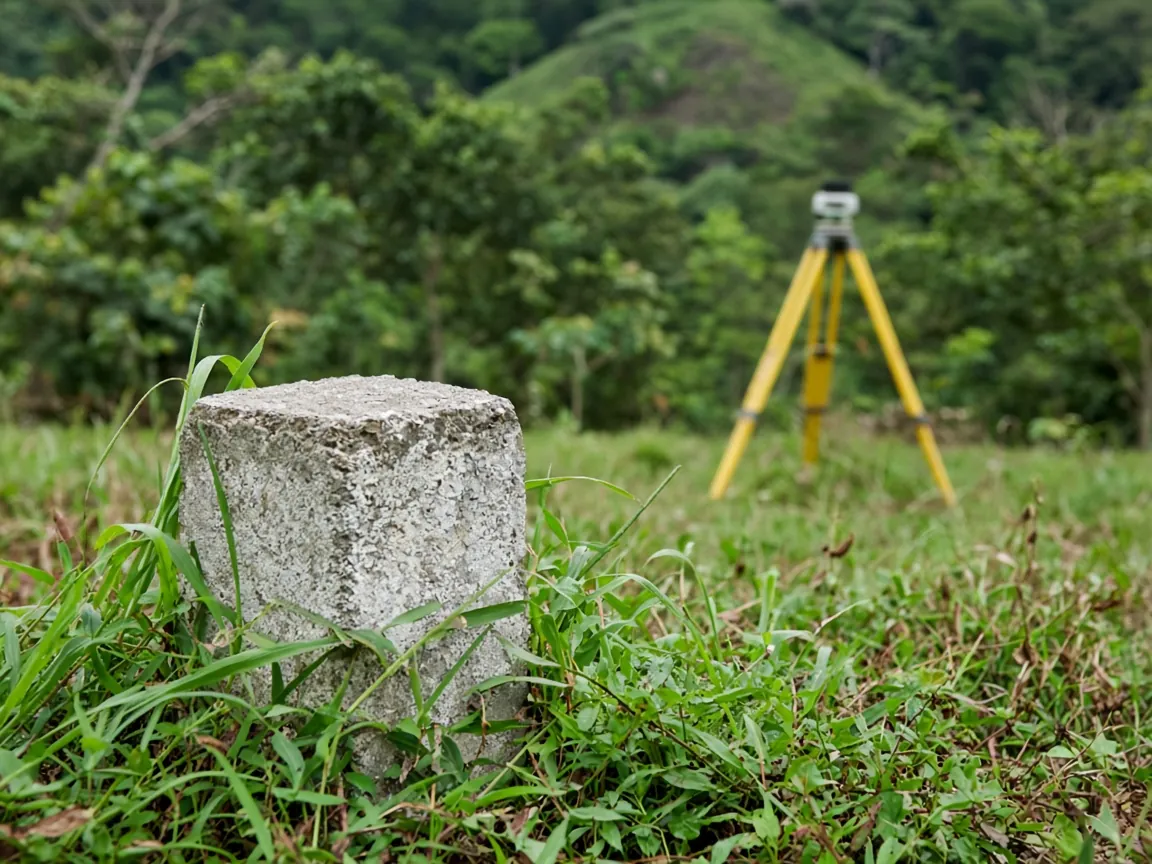
A concrete boundary marker in tall grass on a rural tropical lot. A generated illustration of a typical land-check scene, not a photograph of a specific property.
The first 200 metres inland from the ordinary high-tide line is the Maritime Zone (zona marítimo terrestre) under article 9 of Law 6043. Most of it can't be owned. The first 50 metres are public, and the next 150 metres can only be held as a municipal concession (article 10). Article 47 bars concessions to the following:
- foreigners who have not lived in Costa Rica for at least five years
- companies with bearer shares
- companies domiciled abroad
- companies set up only by foreigners
- companies more than 50% owned by foreigners
Any transfer of shares in a concession-holding company to foreigners is void.
So a "beachfront" listing can be one of three different things: titled land, a concession, or a mix of both. Read the registry entry before you look at the view. Our beachfront guide explains the difference, and the buying-as-a-foreigner guide shows where this check sits in the due-diligence window.
Does the lot have legal road access?
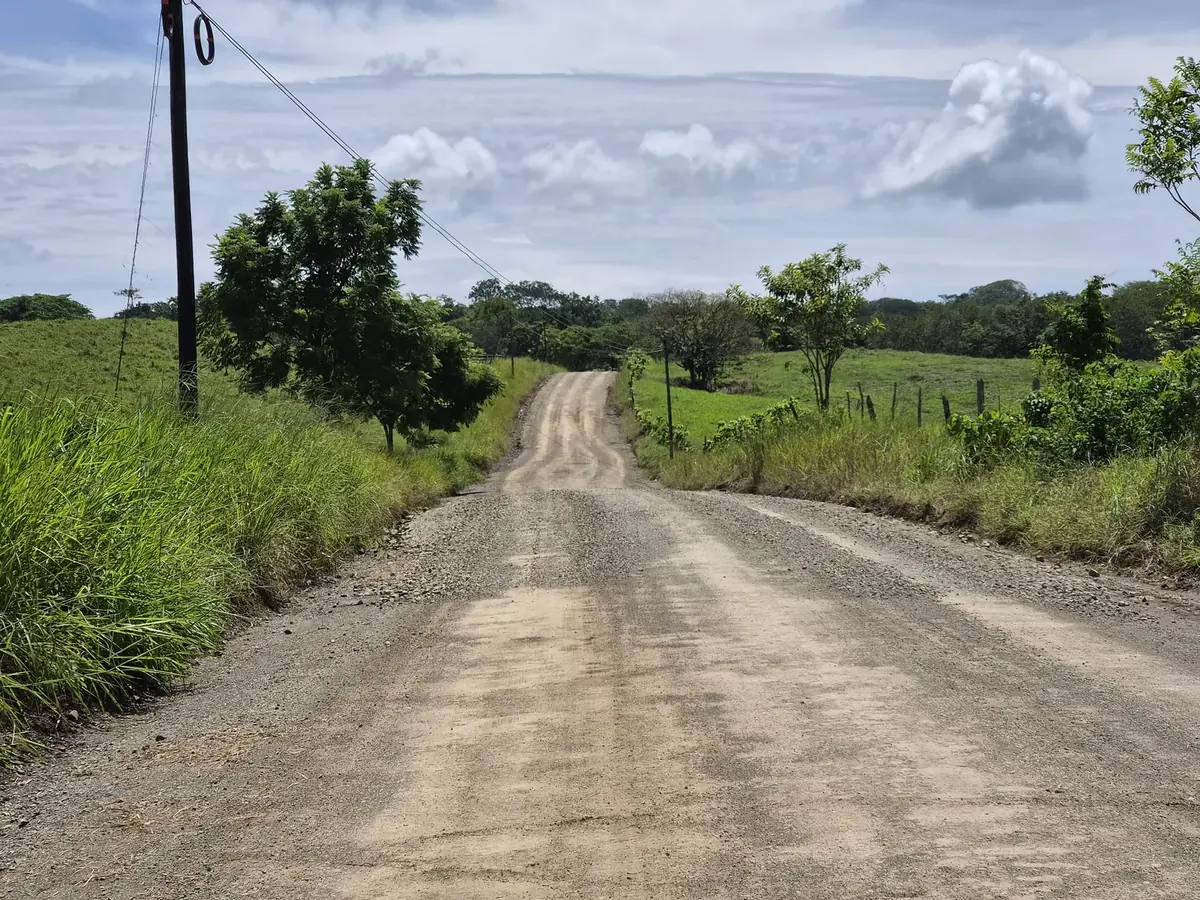
The same kind of access many inland lots actually have: an unpaved road, a fence, and a power line.
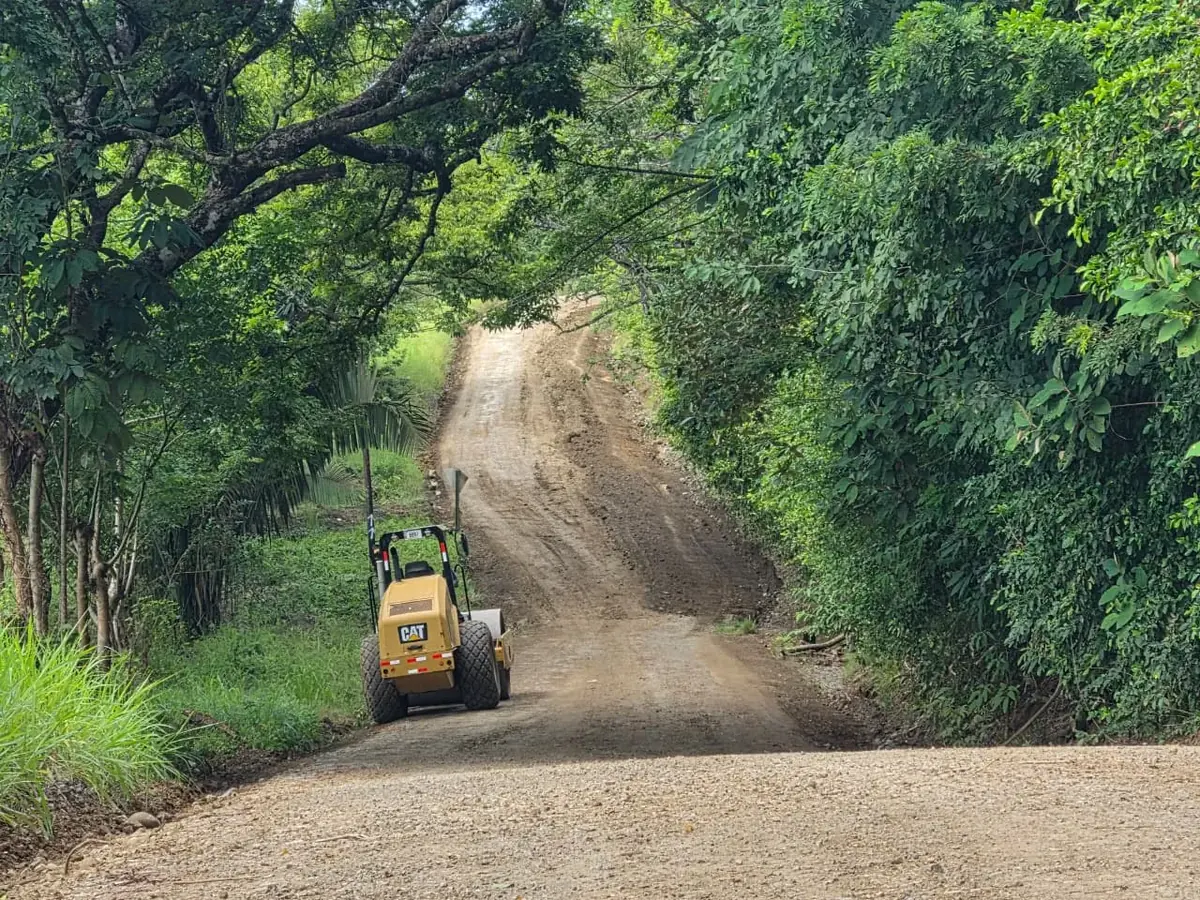
Access roads here are often steep and need regular grading, especially in the rainy season. That is worth checking before you buy, not after.
A driveway, a gate or a neighbour's goodwill is not legal access. A lot has legal access when it fronts a public road, or when it benefits from a servidumbre de paso (right of way) recorded in the registry. Under article 379 of the Civil Code, a right of way of this kind can only be created by agreement or by will, and "possession, even immemorial, is not enough". Thirty years of everyone using the same track creates no right. A lot with no exit to a public road can demand a forced right of way across a neighbour's land, but it must pay for it (article 395), and that means a court case.
Two more details catch buyers out. Under article 33 of INVU's subdivision regulation, an agricultural, livestock or forestry right of way must be at least 7 metres wide and registered. And no municipality or public body has to maintain it, so you and your neighbours do. Drive the access in the rainy season before you commit.
Can I get water to build?
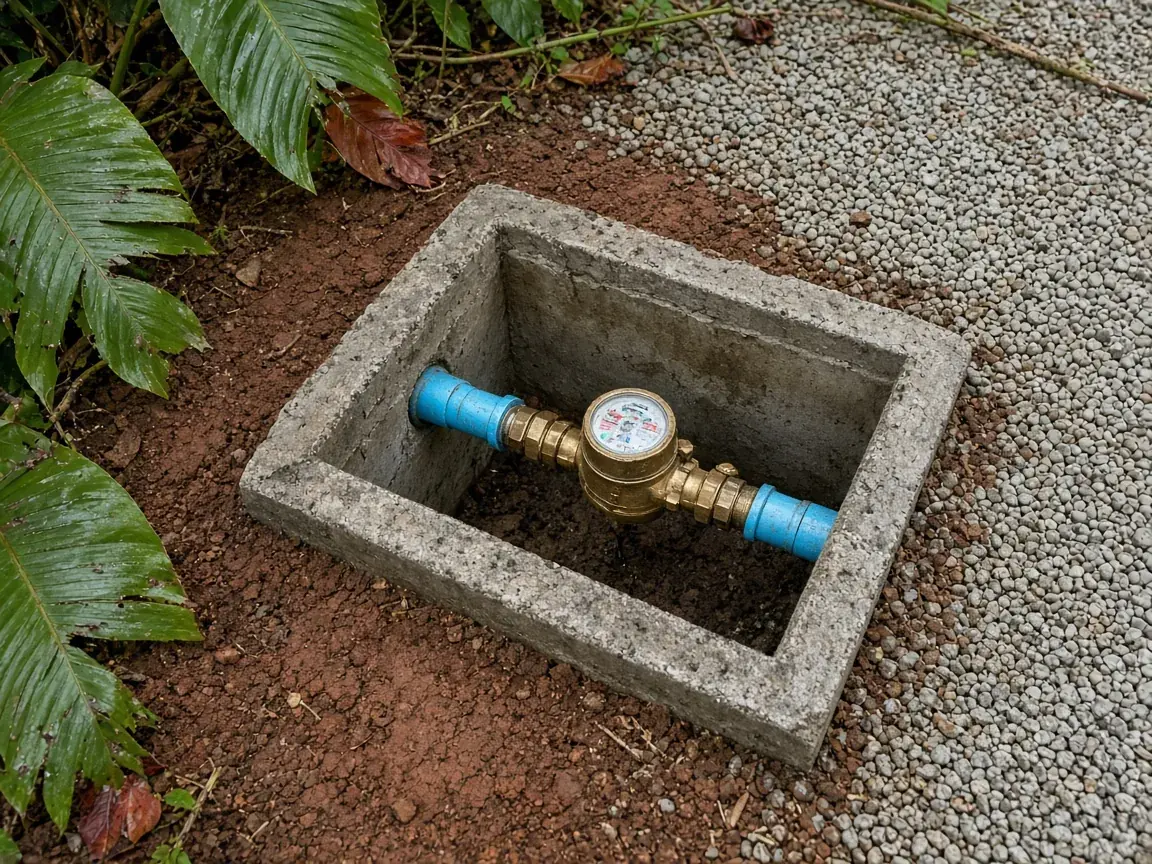
A municipal water meter box beside a gravel driveway. A generated illustration of a typical water-access check, not a photograph of a specific property.
Only if you can prove a water supply. INVU's construction regulation (article 117) requires every building permit to include proof that drinking water is available. That proof is an availability letter from AyA or the local ASADA, or a permitted well or water concession from MINAE. Providers can and do refuse. In March 2024, AyA concluded that the Playa Nosara aqueduct, on the Guanacaste side of the peninsula, lacked the technical feasibility to take on new services and recommended issuing no more availability letters (AyA memo GSD-UEN-GAR-2024-01121). If you plan to build, the letter belongs in the purchase file, not on a to-do list. Our land buyer's guide and eco and off-grid guide explain who can legally issue one and how wells are permitted.
How do I protect the property once it is mine?
Most fraud targets owners who are away, so most of the protection is attention:
- Sign up for Alerta Registral. The National Registry's alert service emails you when a document affecting your property enters the registry. The Registry's published tariff is US$15 a year. It warns you but doesn't block anything, so the email has to reach an inbox you read.
- Check the record a few times a year on the Registry's online portal, rnpdigital.com.
- Keep the place looking lived in. Maintain it, keep the locks working and stay in touch with neighbours.
- Act fast if something changes. Under Law 9602 as amended by Law 10830, you can ask the Registry to cancel an entry when the fraud can be objectively proven. We'll put you in touch with a lawyer the same day about a criminal complaint as well.
- Review any powers of attorney you have given, and revoke the ones you no longer need.
- Keep the company current. If you own through a corporation, pay the annual tax on legal entities. Under article 7 of Law 9428, three consecutive unpaid years are grounds for dissolving the company. The rates and dates are in our property-tax guide.
The checks before you sign
| Check | Document | Where it comes from | Walk away or renegotiate if… |
|---|---|---|---|
| Owner and encumbrances | Registry record (folio real) | National Registry | The seller isn't the registered owner, or there's a recent transfer and mortgage you can't explain |
| Boundaries | Cadastral plan compared with the ground | Catastro, plus a surveyor | Fences or buildings cross the lines |
| Seller's authority | ID, power of attorney or company records | Your lawyer | The power of attorney can't be verified, or the company's status is irregular |
| Notary | Authorisation status | consulta.dnn.go.cr | Suspended or not authorised |
| Escrow | Written escrow agreement; SUGEF registration | Escrow firm; SUGEF register | No written release terms; wire details changed by email |
| Title type | Registry entry; concession file if coastal | Registry; municipality | "Titled" in the ad, concession in the file |
| Access | Public road, or a registered right of way of the required width | Registry; municipality | Access is "by agreement" only |
| Water | Availability letter, or a well permit or concession | AyA or ASADA; MINAE | No letter and no permitted source |
| Taxes paid | Municipal tax certificate; the seller's luxury-home tax filings | Municipality; Ministry of Finance | Arrears. A new owner is jointly liable for the current year's luxury-home tax (Law 8683, art. 7) |
To see each of our listings' title, water and access fields, browse all properties. For the buying process step by step, read our guide to buying as a foreigner. For the tax rates in the last row, see our property-tax guide.
Frequently asked questions
Can Americans and other foreigners legally own property in Costa Rica?
Yes, titled land, personally or through a Costa Rican company, without residency. The exception is Maritime Zone concession land, covered above. The guide to buying as a foreigner has the ownership rules in full.
How does real estate fraud happen in Costa Rica?
Mostly through forged identity documents, forged powers of attorney or fake deeds aimed at owners who are absent. Buyers should confirm the seller's identity and authority, and look at the property's recent registry history. Since December 2025, Law 10830 lets the Registry cancel fraudulent entries when the fraud is objectively proven.
How do I do a title search in Costa Rica?
Your lawyer pulls the property's registry record by its finca number and compares it with the cadastral plan and the site. Do it at the start of due diligence and again just before signing.
What is Alerta Registral and is it worth it?
It's the National Registry's alert service. It emails you when a document affecting your property is filed, for US$15 a year on the Registry's tariff. It warns you but doesn't block filings, so you still need to act quickly.
Is an escrow company registered with SUGEF regulated?
Only under anti-money-laundering rules. SUGEF says registration is not an authorisation to operate and that it doesn't supervise solvency or transactions. Ask for written release instructions and proof of segregated accounts.
Where these facts come from
All checked on 15 November 2026.
- Foreigners' rights: Constitution, article 19.
- Registry fraud reform: Law 10830, Alcance 158 to La Gaceta 233, 11 Dec 2025 (amends Law 9602).
- Priority reservation: Law 3883, arts. 34–36.
- Escrow registration: Law 7786, art. 15; SUGEF register and disclaimer.
- Notaries: Dirección Nacional de Notariado lookup.
- Maritime Zone: Law 6043, arts. 9, 10, 47.
- Access: Civil Code, arts. 379 and 395; INVU Reglamento de Fraccionamiento y Urbanizaciones, art. 33.
- Water: INVU Reglamento de Construcciones, art. 117; AyA memo GSD-UEN-GAR-2024-01121, 19 Mar 2024.
- Alerta Registral: Registro Nacional tariff.
- Taxes: Law 8683, art. 7; Law 9428, art. 7.
Ready to Find Your Dream Property?
Explore our curated selection of properties in Costa Rica's beautiful Nicoya Peninsula.
Explore Properties