Nosara's Blue Zone Secret: Where Surf Culture Meets the Science of Living to 100
Nosara's Blue Zone Secret: Where Surf Culture Meets the Science of Living to 100
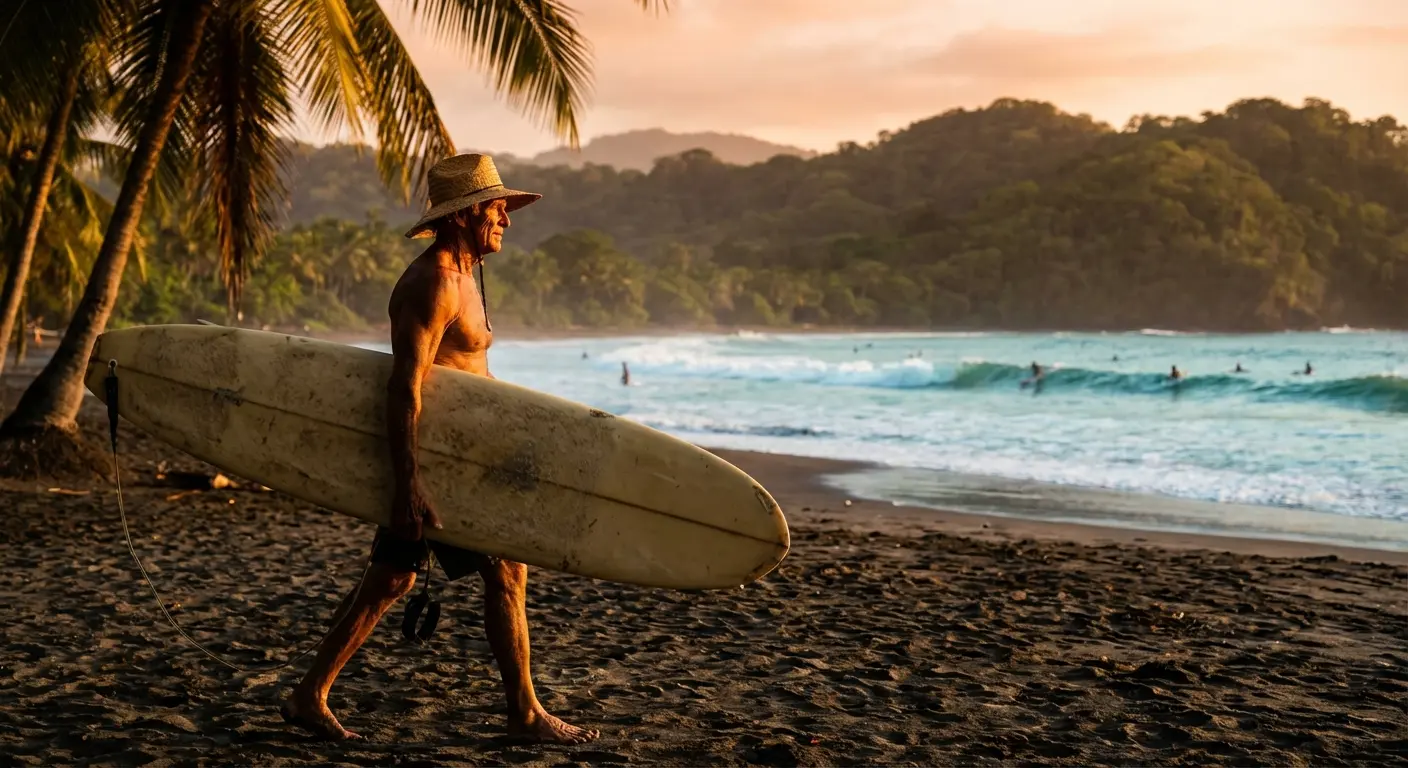
The morning light filters through the canopy as a seventy-two-year-old catches her third wave of the day at Playa Guiones. She's not a visiting retiree chasing a bucket list—she's a local who's been surfing these breaks for decades, embodying what researchers now recognize as one of the world's most compelling longevity formulas. Here on Costa Rica's Nicoya Peninsula, the intersection of consistent swells, mineral-rich water, and a culture that prioritizes pura vida over productivity has created something extraordinary: one of only five Blue Zones on Earth, where people don't just live longer—they live better.
While wellness tourists flock to Bali and Tulum, a quieter revolution unfolds along this 80-mile stretch of Pacific coastline. The Nicoya Peninsula boasts the lowest rate of middle-age mortality worldwide and the second-highest concentration of male centenarians globally. Life expectancy here reaches 85 years compared to the global average of 73. But the real story isn't just about adding years to life—it's about the daily rhythm of existence that makes those years worth living.
The convergence of ancient wisdom and modern surf culture has transformed communities like Nosara and Santa Teresa into living laboratories where wave riders inadvertently practice the principles scientists have spent decades trying to decode.
The Longevity Formula Hidden in Plain Sight
What makes someone live to 100? In Nosara, the answer arrives with the morning offshore winds.
Traditional Nicoya residents have maintained a 95% plant-based diet for generations, built around nixtamalized corn tortillas, black beans, squash, and tropical fruits growing in their backyards. This isn't the restrictive plant-based eating promoted by wellness influencers—it's the practical cuisine of a culture that never needed convincing about the health benefits of mangoes picked from your own tree or beans cooked in clay pots passed down through generations.
"The Nicoyan diet wasn't designed for longevity—it emerged from geography, tradition, and necessity. The fact that it produces centenarians is almost accidental, which makes it more authentic than any wellness protocol."
But diet tells only part of the story. Nosara's geology provides another longevity advantage that residents literally drink daily. The region's limestone-rich water contains elevated calcium and magnesium levels that researchers correlate with stronger bones and cardiovascular health. While wellness retreats charge premium rates for mineral water, locals have been drinking nature's supplement for free.
The surf culture amplifies these inherent advantages in unexpected ways. A 2025 comprehensive surf impact study revealed that regular surfing correlates with 20-30% lower stress hormones and improved cardiovascular markers among Nosara residents. The daily paddle-out isn't just recreation—it's a full-body workout disguised as play, the kind of natural movement Blue Zone researchers identify as crucial for longevity.
The Social Architecture of Waves
Stand at any Nosara surf break during golden hour and you'll witness something remarkable: three generations sharing the lineup. Grandparents offering encouragement to grandchildren. Middle-aged locals mentoring visiting beginners. This intergenerational mixing isn't programmed—it's the organic result of a culture where the ocean serves as the town square.
Blue Zone research consistently identifies strong social connections as a longevity factor, and surf culture provides this in abundance:
- Daily ritual gathering - Morning surf sessions create consistent social touchpoints
- Skill-based mentorship - Knowledge flows naturally between age groups
- Shared purpose - The ocean provides common ground across demographics
- Physical proximity - Small lineups force interaction and community building
The absence of traditional infrastructure in Nosara—no sidewalks, streetlights, or central plaza—paradoxically strengthens these connections. When you navigate unpaved roads on foot or bicycle, when you gather at the farmers market rather than a shopping mall, when your water comes from a community association rather than a municipal system, you're forced into the kind of face-to-face interaction that modern life often eliminates.
The Wellness Tourism Transformation
The secret couldn't stay hidden forever. Between 2024 and 2025, Nosara experienced a 35% increase in wellness retreat bookings compared to pre-pandemic levels. Santa Teresa, once a remote fishing village, now hosts over 100 combined yoga studios, wellness centers, and surf schools across the Nosara-Santa Teresa corridor.
The transformation accelerated dramatically when Costa Rica extended its digital nomad visa program in 2025, allowing remote workers to stay up to two years. Suddenly, the laptop-and-surfboard lifestyle became not just possible but legally sanctioned. A new coworking and wellness campus opened in Nosara in late 2024, featuring surf-adjacent workspaces where you can literally see the waves from your desk.
Real estate prices reflect this surge in interest: 15-25% annual appreciation from 2020-2025, with beachfront properties ranging from $800,000 to $5+ million. Major wellness brands took notice—Equinox and 1Hotels announced plans in 2024-2025 to develop properties in the region, scheduled to open in 2026-2027.
The Development Paradox
Here's the uncomfortable truth: the very factors that created Nosara's Blue Zone lifestyle are threatened by its popularity.
Water scarcity hit hard during the 2024-2025 dry season, forcing several communities to implement rationing. The region's population swells 3-4x during high season (December through April), straining infrastructure designed for a fraction of that number. Cost of living has climbed 30-40% above Costa Rica's national average, pricing out some longtime residents who embody the traditional lifestyle researchers study.
The Nosara Civic Association responded in early 2025 with a comprehensive sustainable development plan that:
- ✅ Limits building heights to three stories maximum
- ✅ Mandates 40% green space on all new developments
- ✅ Requires rainwater harvesting for new construction
- ✅ Maintains 30% protected land status through private reserves
Santa Teresa chose a different path. The late 2024 completion of major road paving improved accessibility but sparked intense debate about whether convenience was worth sacrificing the area's rustic appeal. The community skews younger (average age 32-35 versus Nosara's 38-42), faster-paced, more focused on the Instagram-worthy aspects of surf and wellness culture.
Science Meets Surf: The Research Revolution
Stanford University's mid-2025 announcement of a wellness research center partnership with Costa Rican institutions signals a new phase: studying not just why Nicoyans live longer, but how the surf-wellness lifestyle amplifies Blue Zone principles.
Early findings challenge conventional wellness wisdom:
📊 Consistency over intensity - Daily 45-minute surf sessions outperform sporadic intense workouts for cardiovascular health
📊 Social exercise - Group surf sessions produce better mental health outcomes than solo gym workouts
📊 Purpose-driven movement - Surfing for joy rather than fitness goals correlates with better long-term adherence
📊 Nature immersion - Ocean exposure provides benefits beyond the physical exercise itself
A pilot Blue Zone certification program for restaurants and wellness centers launched in Nosara in 2025, promoting traditional Nicoyan dietary practices. Participating establishments commit to:
- Sourcing 70%+ ingredients locally from regional farms
- Featuring traditional Nicoyan dishes alongside modern offerings
- Eliminating single-use plastics and implementing composting
- Providing nutritional education about Blue Zone principles
Meanwhile, indigenous Chorotega communities launched cultural tourism initiatives offering traditional pottery workshops, medicinal plant tours, and ancestral cooking classes—preserving the heritage that created the Blue Zone while sharing it with curious visitors.
The Seven-Kilometer Classroom
Playa Guiones stretches seven kilometers of consistent beach break, with year-round waves suitable for all skill levels. Water temperatures hover between 80-85°F, warm enough that locals often surf without wetsuits. The beach's orientation and underwater topography create multiple peaks, spreading crowds and allowing space for both beginners and experts.
But Guiones is just one option. The Nosara area features seven distinct surf breaks, each with its own character:
- Playa Pelada - Reef break with tide pools, perfect for sunset sessions
- Playa Garza - Traditional fishing village atmosphere, uncrowded waves
- Playa Ostional - Adjacent to the world's most important Olive Ridley sea turtle nesting site
The surf culture here differs fundamentally from competitive surf destinations. Schools operate on a cooperative model, sharing resources and cross-promoting rather than competing. The emphasis falls on progression and enjoyment rather than performance and rankings.
The Green Season Advantage
While high season (December-April) brings offshore winds and ideal conditions, the green season (May-November) offers its own appeal. Afternoon rains keep the landscape lush, crowds thin dramatically, and accommodation prices drop 30-50%. The South Pacific swells arrive with consistency, and you might share a break with just a handful of locals.
⚠️ Important consideration: Medical facilities remain limited, with basic clinics in Nosara and Santa Teresa but serious medical care requiring travel to Liberia (2 hours) or San José (4-5 hours). This reality check matters for anyone considering extended stays.
Living the Question
Can a place maintain the qualities that made it special once those qualities become commodities? Can surf culture and wellness tourism coexist with the traditional lifestyle that created the Blue Zone in the first place?
The Costa Rican government's 2025 designation of an additional 5,000 acres of marine protected area off the Nicoya coast suggests awareness of what's at stake. Local communities achieved a 60% recycling rate and launched ocean plastic collection initiatives. The infrastructure remains deliberately limited—mostly unpaved roads in Nosara, encouraging slower-paced living and reducing vehicle speeds to protect wildlife.
These aren't just environmental gestures. They're recognition that Nosara's value lies not in becoming another polished resort destination but in preserving the rough edges that force you to slow down, look around, and connect with the place and people around you.
The seventy-two-year-old surfer paddling out at dawn isn't an anomaly here—she's the blueprint. Not because she follows a longevity protocol or wellness routine, but because she's woven daily ocean engagement, strong community ties, plant-based eating, and purposeful living into the fabric of an ordinary life.
That's the real secret of Nosara's Blue Zone: longevity as a side effect of living well rather than a goal pursued directly. The question for visitors, investors, and digital nomads arriving in increasing numbers is whether they'll embrace that wisdom or inadvertently destroy it by loving it too much.
The waves will keep coming. Whether the culture that makes those waves meaningful can survive the attention is the story still being written along this 80-mile stretch of Pacific coastline where people live measurably longer, demonstrably happier lives.
Ready to Find Your Dream Property?
Explore our curated selection of properties in Costa Rica's beautiful Nicoya Peninsula.
Explore Properties