Beyond Sustainability: How Costa Rica's Regenerative Tourism Heals the Planet One Visitor at a Time
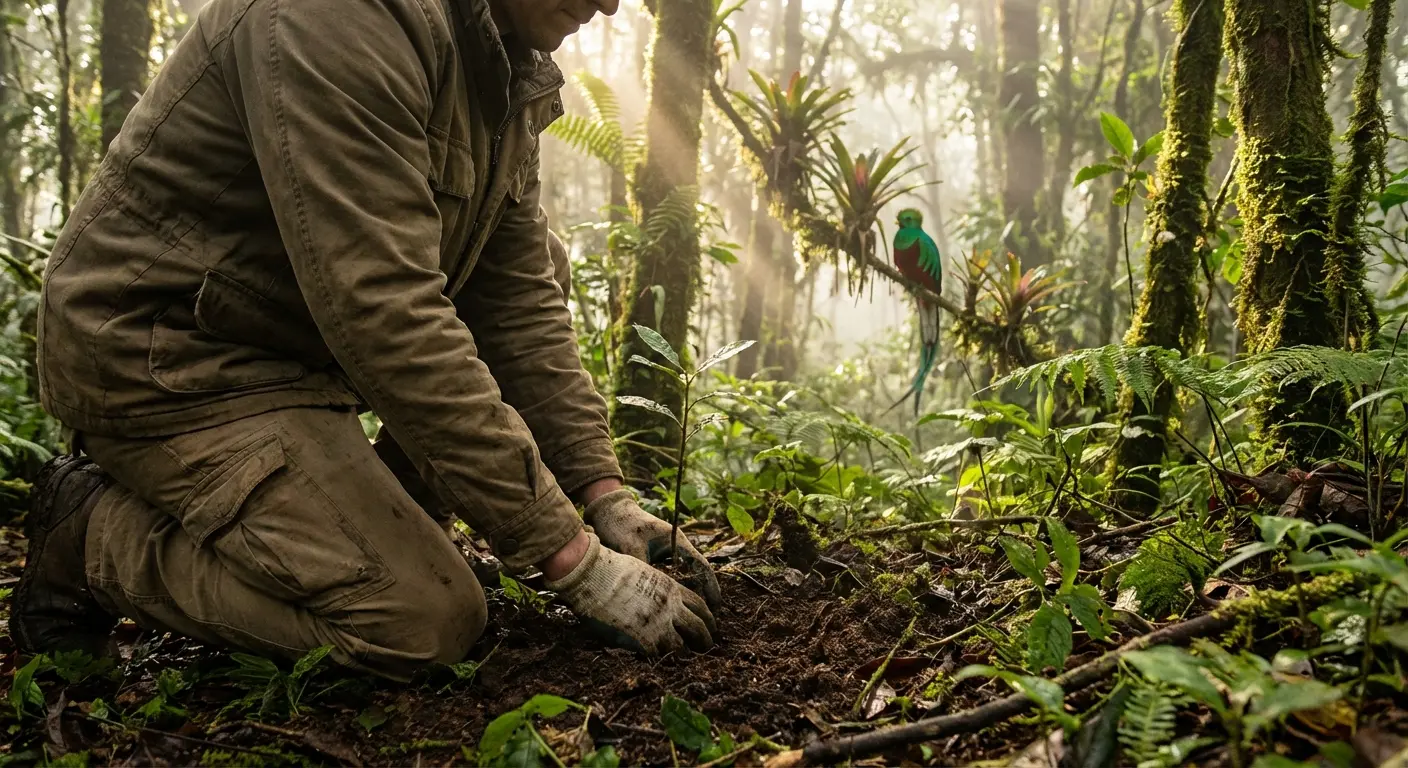
The dawn mist clings to the canopy as you kneel in the rich volcanic soil of Monteverde, hands covered in earth, carefully tucking a native guarumo seedling into its new home. Around you, fellow travelers from Germany, Australia, and California do the same—each planting trees that will become wildlife corridors for jaguars and resplendent quetzals. This isn't a voluntary add-on to your vacation. It's the vacation itself.
Welcome to Costa Rica's regenerative tourism revolution, where the very act of traveling doesn't just minimize harm—it actively heals the planet. In December 2024, Costa Rica's Tourism Board officially launched its Regenerative Tourism Certification program, marking a paradigm shift from the "do no harm" ethos of sustainable tourism to something far more ambitious: making destinations better than you found them. And the results? They're nothing short of extraordinary.
With 3 million annual tourists contributing 8.2% to national GDP, Costa Rica has transformed its greatest economic asset into its most powerful conservation tool. But the real story isn't in the numbers—it's in the mud on your hands, the sea turtle hatchlings you'll release tonight, and the mangrove seedlings that will sequester carbon for generations.
The Evolution Beyond Sustainability
For decades, Costa Rica has been the poster child for ecotourism. The country reversed catastrophic deforestation, increasing forest cover from a devastating 21% in 1987 to over 60% today. But somewhere along the way, conservationists and community leaders realized that "sustainable" wasn't enough. Maintaining the status quo meant accepting degraded ecosystems, fragmented forests, and declining wildlife populations as the new normal.
"Sustainability asks us to maintain what we have. Regeneration demands we restore what we've lost—and tourism gives us the economic engine to do it."
The regenerative model requires something radical: 3-5 hours of mandatory conservation work during each visitor's stay. Not suggested. Not optional. Required. And tourists are saying yes at rates that shock even the program's architects.
Participation rates hover between 78-85%, with 92% of visitors reporting increased environmental awareness after their trips. These aren't performative gestures—they're measurable interventions with trackable outcomes. In Monteverde alone, visitors planted 45,000 trees in the fourth quarter of 2024, creating 12 kilometers of new wildlife corridors that reconnect fragmented forest patches.
The Science of Restoration
What makes regenerative tourism work isn't feel-good volunteerism—it's rigorous ecological science paired with economic incentives. Each conservation activity targets specific restoration goals tied to measurable outcomes:
- Mangrove planting in Tortuguero sequesters 3-5 times more carbon per hectare than tropical rainforests, with each seedling capturing approximately 12.3 kg of CO2 annually
- Sea turtle nest monitoring has contributed to a 34% increase in green sea turtle nesting compared to 2023
- Trail restoration and invasive species removal in Monteverde supports 400+ bird species, 100+ mammal species, and 2,500+ plant species across 26,000 protected acres
The economic impact? Communities implementing regenerative models report 20-23% revenue increases compared to traditional ecotourism approaches, with household incomes rising 28-40% since program inception.
Tortuguero: Where Turtles and Tourism Collide
Accessible only by boat or plane, Tortuguero feels like the edge of the world—a labyrinth of canals winding through dense rainforest where caimans sun themselves on logs and howler monkeys provide the dawn chorus. This remote Caribbean village of 1,200 residents hosts 200,000+ annual visitors, and 85% participate in sea turtle conservation during nesting season.
But it's the mangroves that tell the real story of regeneration.
Since 2022, Tortuguero's restoration programs have planted 125,000 mangrove seedlings with a 78% survival rate, restoring 45 hectares of degraded coastal areas. The ecological cascade has been dramatic: fish populations in restored zones have increased by 60%, providing both food security and economic opportunity for local fishing cooperatives.
The Tortuguero Model
What makes Tortuguero's approach work is community ownership. 90% of tourism revenue stays within the village through locally-owned lodges, guide cooperatives, and conservation associations—generating $8.5 million annually for an economy that had few alternatives before regenerative tourism arrived.
Your typical day in Tortuguero might include:
- Pre-dawn turtle patrol monitoring nests and protecting hatchlings from predators
- Mangrove planting expedition by kayak through the canal system
- Wildlife monitoring documenting species in the park's 11 different habitats
- Community workshop learning traditional fishing techniques that don't harm marine ecosystems
The work is real. The mud is deep. The mosquitoes are relentless. And visitors keep coming back, bringing friends and family to experience what one German tourist described as "the most meaningful vacation of my life."
Monteverde: Cloud Forest Laboratory
At 1,400 meters elevation, Monteverde exists in perpetual mist—a cloud forest ecosystem so rare it represents just 0.01% of Earth's surface yet harbors 3% of global biodiversity. The challenge here isn't species extinction but habitat fragmentation. Decades of cattle ranching carved the forest into isolated patches, stranding wildlife populations in green islands surrounded by pasture.
Regenerative tourism is stitching those islands back together.
The Monteverde Cloud Forest Reserve expanded its Visitor Conservation Corps program in April 2024, enabling tourists to participate in:
- ✅ Reforestation corridor creation connecting fragmented forest patches
- ✅ Wildlife monitoring using camera traps and acoustic sensors
- ✅ Trail restoration preventing erosion and maintaining ecosystem integrity
- ✅ Invasive species removal protecting native plant communities
15,000 participants in the first year have created wildlife corridors now documented by camera traps showing jaguars and pumas using the restored pathways. The 8 villages comprising Monteverde's 6,500 residents have seen 65% working in tourism-related activities, and regenerative programs have reduced youth emigration by 40% since 2020—young people staying because they see meaningful work restoring their home.
The Economics of Restoration
Monteverde's model demonstrates that regeneration isn't charity—it's smart business. Tour operators incorporating mandatory conservation components command premium pricing 20-30% above conventional tours. Visitors aren't resistant; they're seeking it out. The waiting list for certain regenerative experiences extends months into the future.
Community cooperatives introduced mandatory reforestation to all tour packages in October 2024. Each visitor must plant a minimum of three native tree species—no exceptions. The result? 45,000 trees planted in Q4 2024 alone, with survival rates exceeding 85% thanks to proper site selection and aftercare protocols.
Punta Leona: The Carbon-Negative Frontier
Ninety minutes from San José on the Central Pacific coast, Punta Leona represents regenerative tourism's most ambitious iteration: Latin America's first carbon-negative resort, certified in July 2024 for offsetting 150% of operational emissions through on-site reforestation and renewable energy.
The 750-acre private reserve encompasses 3 kilometers of Pacific coastline and serves as a critical biological corridor between Carara National Park and coastal marine areas. Camera trap studies document 62 mammal species including all six Costa Rican wild cat species—from jaguars to margays—using the corridor for movement and hunting.
Living Laboratory
Punta Leona operates as a living laboratory where visitors witness regeneration in real-time:
📊 Scarlet macaw breeding program has released 180 birds into the wild since 2020, increasing local population by 45%
📊 Forest restoration projects have converted degraded pastureland back to tropical rainforest, supporting populations of white-faced monkeys and three-toed sloths
📊 Renewable energy systems provide 100% of resort power needs while generating surplus fed back to the national grid
The resort balances 2,000 annual residents with 50,000+ visitors while maintaining 80% of land as protected forest—proof that regeneration and revenue aren't mutually exclusive.
The Nicoya Blueprint: Blue Zone Meets Green Revolution
The Nicoya Peninsula adds a unique dimension to Costa Rica's regenerative story: one of only five Blue Zones globally where people routinely live past 90, this 75-mile-long peninsula demonstrates how traditional ecological knowledge and modern restoration science create synergy.
Nicoya's regenerative tourism emphasizes agro-tourism experiences where visitors participate in organic farming, traditional food preparation, and forest garden restoration. These experiences command 30% premium pricing over conventional tours because they offer something money typically can't buy: immersion in a culture that has maintained sustainable relationships with land for generations.
Regenerative Agriculture at Scale
Since 2021, Nicoya communities have restored 3,400 hectares of degraded pastureland to productive agroforestry systems, sequestering an estimated 85,000 tons of CO2. The peninsula's volcanic soil and unique microclimate support diverse crops grown using traditional methods that build soil health rather than depleting it.
⚠️ 25 active living laboratory projects across 15 communities allow visitors to learn from elders while participating in watershed restoration, creating intergenerational knowledge transfer that benefits both conservation and cultural preservation.
The UNESCO recognition received in September 2024 acknowledged this integration of traditional ecological knowledge with regenerative tourism practices—validation that the future of conservation might lie in honoring the past.
The Ripple Effect
Costa Rica's regenerative tourism revolution isn't happening in isolation. The International Union for Conservation of Nature (IUCN) highlighted the model as global best practice in February 2024, recommending replication across 15 other biodiversity hotspots worldwide. The country's Ministry of Environment and Energy now integrates regenerative tourism metrics into national climate action reporting, recognizing the sector's critical role in achieving carbon neutrality by 2050.
With $12 million in new infrastructure investment funded through green bonds and international climate finance, and over 400 tourism businesses pursuing certification under the new regenerative criteria, the momentum is undeniable.
But the real measure of success won't be found in policy documents or certification programs. It will be in the forests growing denser, the sea turtle populations rebounding, the communities thriving, and the travelers returning home transformed—carrying not just photographs but a new understanding of their relationship with the natural world.
The invitation is clear: Come to Costa Rica not just to see paradise, but to restore it. Your hands in the soil, planting trees that will outlive you. Your presence on the beach, protecting hatchlings on their journey to the sea. Your participation in an experiment that asks whether tourism—so often blamed for environmental destruction—might become one of conservation's most powerful tools.
The answer, written in mangrove roots and cloud forest canopy, appears to be yes.
Ready to Find Your Dream Property?
Explore our curated selection of properties in Costa Rica's beautiful Nicoya Peninsula.
Explore Properties