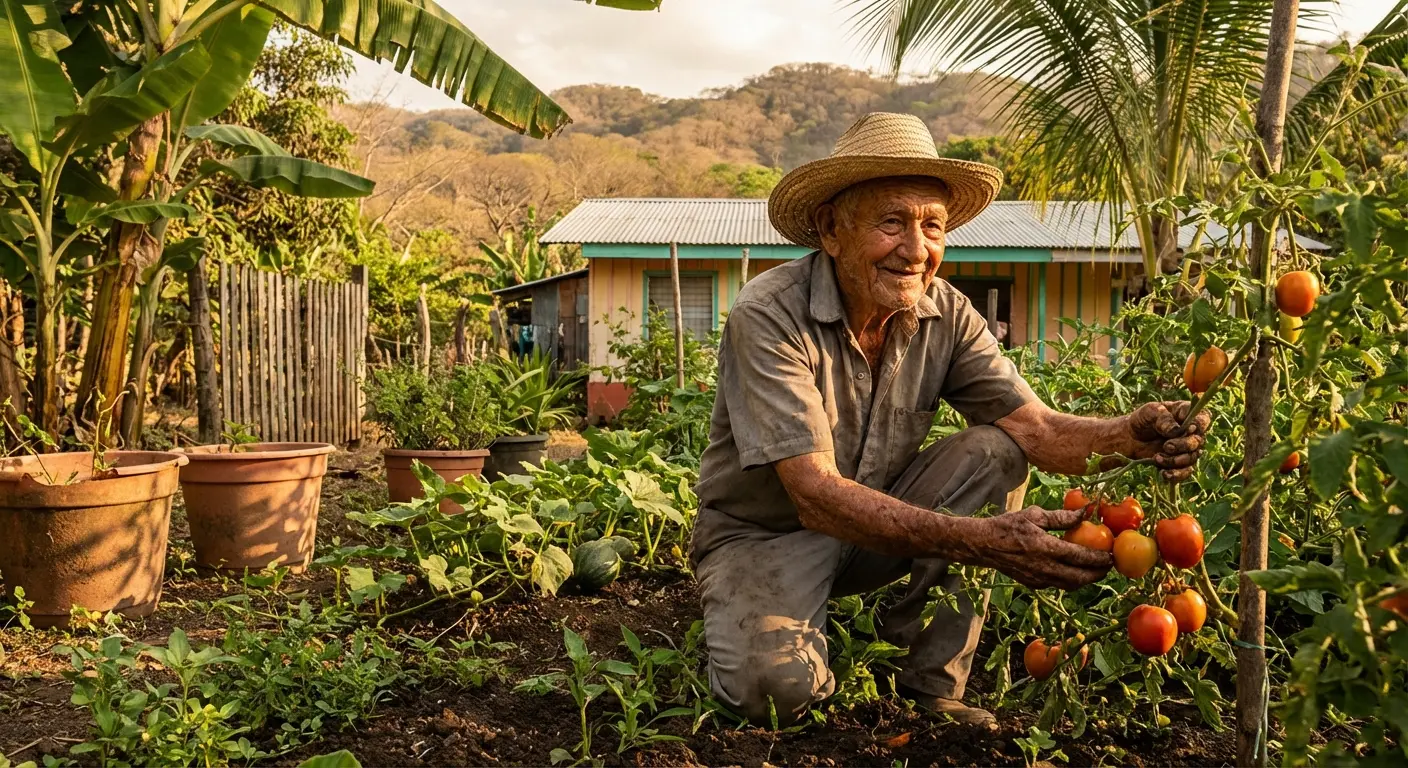
The Vanishing Paradise: Inside Costa Rica's Endangered Blue Zone
On the sun-scorched Nicoya Peninsula, where the Pacific Ocean crashes against Costa Rica's northwestern coast, something extraordinary has been happening for generations. Here, in five modest cantons scattered across Guanacaste province, residents have been defying mortality with remarkable consistency. Men born in the early 20th century achieved centenarian status at seven times the rate of their Japanese counterparts—a staggering statistic in a nation already celebrated for longevity. But this fountain of youth, one of only five Blue Zones identified globally, is now facing an existential crisis that threatens to erase its legacy within two decades.
The story of Nicoya's Blue Zone is both a celebration of human potential and a cautionary tale about the fragility of traditional wisdom in our modern world.
The Science Behind the Longevity Miracle
When researchers first identified the Nicoya Peninsula as a Blue Zone in 2000, they discovered a demographic anomaly that challenged conventional assumptions about aging and prosperity. Despite having one of Costa Rica's lowest average incomes, this 80-mile peninsula harbored over 900 people above age 90 and more than 5,000 inhabitants over 75. The region's residents enjoyed an 85-year life expectancy, with those over 90 experiencing a 10% lower mortality rate than other Costa Ricans.
What made these findings particularly intriguing was their specificity. The longevity advantage appeared primarily in males and vanished completely in those who migrated away from the region—suggesting that geography, environment, and lifestyle formed an irreplaceable trinity of factors.
Beneath the surface statistics lay fascinating biological markers. Nicoyan centenarians exhibited longer telomeres—the protective caps on chromosomes that typically shorten with age—and maintained more favorable DHEAS levels, a hormone associated with vitality and stress resilience. Their cardiovascular mortality rate registered at just 0.65 compared to national averages, despite limited access to cutting-edge medical care.
The secret, researchers discovered, wasn't locked in expensive treatments or pharmaceutical interventions. It resided in something far more elemental: the rhythms of daily life itself.
The Three Sisters and the Water of Life
At the heart of Nicoyan longevity lies a diet that predates colonial contact by millennia. The traditional eating pattern centers on what Mesoamerican cultures called the “three sisters”—squash, corn, and beans—a nutritional triumvirate that provides complete proteins, complex carbohydrates, and essential micronutrients. Supplemented with tropical fruits like papaya and mango, along with modest portions of lean protein, this plant-forward diet created a metabolic environment that protected against the chronic diseases plaguing modern societies.
But the food tells only part of the story. The peninsula's water contains naturally elevated levels of calcium and magnesium, minerals that strengthen bones and protect cardiovascular health. This geological gift has resulted in remarkably low rates of osteoporosis and heart disease, even among the oldest residents. The water itself, drawn from ancient aquifers filtered through volcanic rock, became an inadvertent elixir of longevity.
Equally important is how Nicoyans eat. Meals remain social occasions spanning generations, where great-grandparents share tables with toddlers, reinforcing the intergenerational bonds that give life meaning. The concept of plan de vida—a reason for living—permeates these gatherings, reminding the elderly that their wisdom, stories, and presence hold irreplaceable value.
The Geography of Wellness
The Nicoya Peninsula occupies a unique ecological niche, straddling Guanacaste and Puntarenas provinces in a landscape of dry tropical forest rather than the rainforests typically associated with Costa Rica. With nearly 365 days of sunshine and temperatures hovering between 89 and 100 degrees Fahrenheit, the climate encourages outdoor living and constant natural movement.
From the historic city of Nicoya—home to Costa Rica's oldest church and steeped in indigenous Chorotega traditions—to coastal communities like Sámara, Nosara, and Santa Teresa, the peninsula has maintained a geographic isolation that preserved traditional lifestyles long after modernization swept through other regions. Small agricultural towns like Puerto Humo, with just 200 inhabitants, represent the Blue Zone's beating heart, where cattle raising and subsistence farming keep residents physically active well into their tenth decade.
This isolation, however, is rapidly eroding. International airports now funnel tourists into beach towns that have transformed from fishing villages into wellness destinations. The “Pura Vida” philosophy that once described a genuine way of life has become a marketing slogan, commodified for visitors seeking authenticity in yoga retreats and surf camps.
The Disappearing Advantage
Recent research has revealed a troubling truth that challenges the Blue Zone narrative: the longevity miracle is vanishing before our eyes. A comprehensive 2023 demographic study analyzing 550,000 adult Costa Ricans from 1990 to 2020 documented what scientists call a cohort effect—the longevity advantage that made Nicoya famous is disappearing generation by generation.
Males born in 1905 enjoyed a 33% lower mortality rate than their counterparts elsewhere in Costa Rica. But those born in 1945 showed a 10% higher mortality rate, completely reversing the advantage. The geographic Blue Zone itself has contracted dramatically, shrinking from 207,000 inhabitants to approximately 25,000, now concentrated mainly around Hojancha canton and communities south of Nicoya city.
The culprits are distressingly familiar. Younger generations are abandoning traditional diets for ultra-processed foods, leading to soaring rates of obesity and diabetes. Economic pressures force families apart, eroding the intergenerational ties that provided purpose and social support. The constant natural movement that came from agricultural work is being replaced by sedentary occupations and screen time.
University of Costa Rica researchers studying these trends in 2024 and 2025 have issued stark warnings: if current trajectories continue, the Blue Zone could vanish entirely within 20 years, reduced to a small speck on future maps—a footnote in longevity research rather than a living laboratory.
Racing to Preserve a Legacy
The crisis has spurred action from multiple fronts. The Costa Rican government signed a Framework Cooperation Agreement establishing policies to support the Blue Zone, promoting sustainable rural tourism and health initiatives across the five blue cantons. The Costa Rican Tourism Board launched the “Wellness Pura Vida” strategy, positioning Nicoya as a premier wellness destination while attempting to channel tourism revenue into preservation efforts.
Meanwhile, Stanford Medicine researchers continue investigating the molecular mechanisms underlying Nicoyan longevity, studying telomere length and DNA methylation patterns in surviving centenarians. Their work holds potential applications far beyond Costa Rica, offering insights into healthy aging that could benefit populations worldwide.
But the most important preservation efforts may be the simplest: encouraging young Nicoyans to maintain family meals, grow traditional crops, and honor the wisdom of their elders. In Puerto Humo and Hojancha, where the Blue Zone flame still flickers, some families are consciously choosing tradition over convenience, recognizing that their ancestors' lifestyle holds value that transcends economic metrics.
The Lesson of Nicoya
The Nicoya Peninsula's Blue Zone offers a profound lesson for our hypermodern age: the factors that promote human flourishing often have little to do with wealth, technology, or medical intervention. They emerge instead from the simple rhythms of purposeful work, nourishing food, strong relationships, and connection to place.
As the original Blue Zone advantage fades, its legacy endures in the centenarians who still walk these sun-baked roads, their longevity a living testament to a way of life that once seemed ordinary but now appears almost miraculous. Their survival poses an urgent question: can we preserve and revive traditional wisdom before it vanishes entirely, or will Nicoya become merely a memory of what was possible when humans lived in harmony with their environment and each other?
The answer may determine not just the future of one Costa Rican peninsula, but the wellness trajectory of communities worldwide seeking their own path to longevity and vitality.
Ready to Find Your Dream Property?
Explore our curated selection of properties in Costa Rica's beautiful Nicoya Peninsula.
Explore Properties